

Last updated on March 20, 2026
Choosing between a crane and a forklift is one of the most important decisions when loading heavy equipment. The wrong choice can lead to delays, damage, safety risks and unnecessary costs.
Many businesses assume cranes and forklifts perform the same role, but each serves a distinct purpose. In this guide, we break down the differences between a crane vs forklift and when to use each.
At Bill Removalists, we use both forklifts and crane truck services to support heavy equipment shipping, container transport, pallet handling and industrial relocations across Australia.
Crane vs. Forklift: What’s the Difference?
The difference between a crane and a forklift comes down to how they lift.
What is a crane?
A crane is an overhead lifting system that uses a hoist, wire ropes, or chains to raise, lower and move heavy loads vertically. Cranes lift from above the load, allowing them to reach over obstacles, position materials at significant heights and handle irregular or oversized items.
Several types of cranes are used in equipment loading. Crane trucks combine a truck body with a mounted crane, allowing a single vehicle to transport and lift freight on-site without the need for separate lifting equipment. Tower cranes are fixed structures used on large construction projects, and overhead cranes are installed inside warehouses or factories and run along fixed rails to move loads across a workspace.
What is a forklift?
A forklift is a powered industrial truck fitted with fork-shaped attachments that slide underneath a load to lift, carry and position it. Forklifts are designed primarily for palletised or flat-based loads and operate most effectively on stable, level ground.
Forklifts can pick up, transport and set down loads quickly with minimal setup, making them ideal for repetitive tasks in warehouses, freight yards and loading docks. While primarily ground-level machines, mast extensions allow them to reach moderate heights for tasks such as warehouse rack stacking.
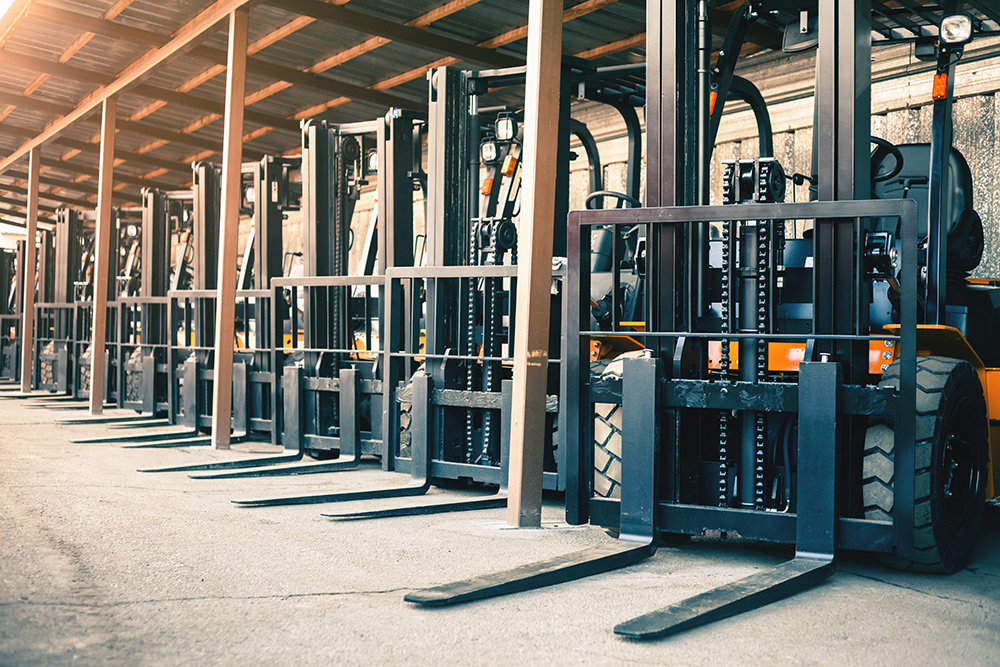
Some factors to consider before choosing between a crane and a forklift include lift height requirements, load weight and dimensions and job space site constraints.
Key Factors to Consider Before Choosing
Deciding between a crane and a forklift isn’t always straightforward. The right choice depends on load characteristics, site conditions and lift height requirements. Here are the five key factors to work through before making a decision.
1. Load Weight and Dimensions
Load weight is often the first deciding factor. Standard forklifts handle loads from around 1 to 5 tonnes, with heavy-duty models reaching up to 10 or 15 tonnes. Beyond that range, a crane is typically required.
Dimensions matter just as much as weight. Forklifts require loads with a flat base or fork pockets, so they work well with palletised freight, crated equipment and standard containers. Irregularly shaped, oversized, or awkwardly balanced loads are better suited to crane rigging, where custom slings, spreader bars and purpose-built frames can safely support the item.
2. Lift Height Requirements
Most standard forklifts reach between 3 and 6 metres, which covers ground-level loading, flatbed truck loading and warehouse rack stacking. Cranes are essential if you need something taller than 6 metres. Examples include placing rooftop HVAC units, lifting equipment onto elevated platforms, or positioning materials on multi-storey construction sites.
3. Job Site Space Constraints
Forklifts have a compact footprint and can manoeuvre through narrow aisles, tight loading docks and confined indoor spaces, making them the practical choice where space is limited.
Cranes require more room. For example, mobile cranes need space for outrigger deployment, which can extend several metres beyond the vehicle body, and the swing radius must be clear of buildings, power lines and other obstacles.
4. Terrain and Ground Conditions
Standard forklifts operate best on flat, paved, level surfaces. On rough, uneven, or soft ground, a standard forklift can become unstable and risk tipping under load. While rough terrain forklifts are available, they come at higher hire costs.
Cranes offer more flexibility. Crawler cranes can operate on soft or uneven ground, while mobile cranes use outriggers and load-distribution pads to create a stable platform on most surfaces. Even so, a thorough ground assessment is still required to confirm that the surface can support the combined weight of the crane and its load.
5. Safety and Regulatory Requirements
Both cranes and forklifts are regulated under Australian workplace health and safety laws. Operators must hold the appropriate licences and all lifting operations must comply with relevant Work Health and Safety (WHS) regulations and Australian Standards.
Forklift operators require a High Risk Work Licence (HRWL) issued by the relevant state or territory regulator. Crane operations require separate licences depending on the crane class, and jobs involving suspended loads typically require a licensed dogman and rigger in addition to the crane operator.
If safety or regulatory complexity is a concern, working with an experienced logistics provider like Bill Removalists ensures that your heavy machinery or equipment is moved safely and in accordance with regulations.
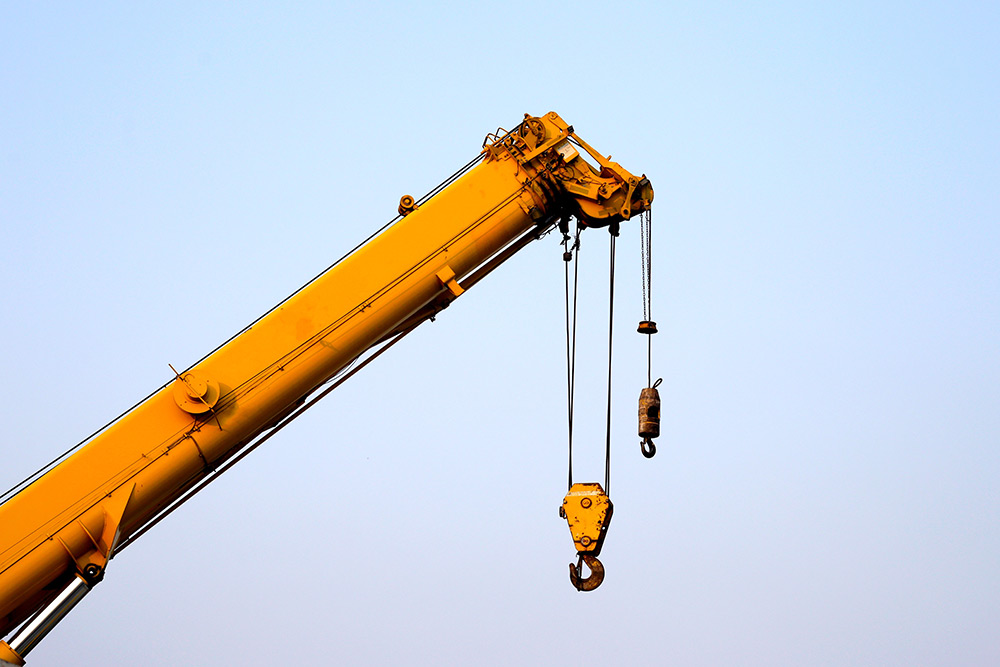
A crane is usually the better choice if you’ve got a job that exceeds what ground-level equipment, such as a forklift, can safely handle.
When a Crane is the Better Choice
Cranes are the right choice when the job exceeds what ground-level equipment can safely handle. Common scenarios include lifting equipment onto rooftops or elevated platforms, moving oversized or irregularly shaped machinery that forklifts cannot support and supplying materials to multi-storey construction projects.
Cranes are also used in port and marine loading operations involving heavy containerised freight, as well as for extremely heavy industrial equipment that exceeds forklift capacity.
Best for: Heavy, high, oversized, or complex lifts that require reach, rigging flexibility and significant load capacity.
Cost note: Crane hire involves higher mobilisation costs than forklift rental, and jobs typically require a crane operator, a rigger and a dogman. However, for loads that exceed forklift capability, a crane is not just the better option, it’s the only safe option.
At Bill Removalists, our crane truck services are designed to provide cost-effective solutions for heavy and oversized loads, with experienced operators and full job-site coordination included.
When a Forklift is the Better Choice
Forklifts are the right choice when the job involves standard loading tasks on level ground. Common scenarios include warehouse and freight yard equipment loading, short-distance transport of palletised goods, loading pallets, crates, or containers onto trucks, indoor material handling in factories and distribution centres and repetitive lifting jobs where speed and cycle time matter.
Best for: Fast, efficient, ground-level loading of palletised or flat-based loads on stable surfaces.
Cost note: Forklifts are significantly more affordable to hire than cranes, with lower operator costs and minimal setup time. For standard loading operations, a forklift delivers the best balance of speed, cost and efficiency. Bill Removalists can coordinate forklift and heavy equipment loading as part of our broader cargo transportation and industrial transport services.
Crane vs Forklift: A Side-by-Side Comparison
| Factor | Forklift | Crane |
|---|---|---|
| Typical capacity | 1-15 tonnes | 10-500+ tonnes |
| Best surface | Flat, paved and level | Almost any (with proper setup) |
| Speed per lift | Fast with minimal setup | Slower, requires rigging and positioning |
| Reach and height | Limited to mast height (typically 3-6m) | Boom reaches up to 60m+ |
| Load shape flexibility | Requires a flat base or fork pockets | Custom rigging suits almost any shape |
| Operator requirements | Licensed forklift operator | Crane operator, rigger and dogman |
| Setup time | Minimal | Significant |
Get a Competitive & Affordable Online Quote
When it comes to heavy equipment loading, Bill Removalists Sydney provides the expertise, equipment and logistics support needed for a safe, compliant and stress-free move. Whether you need crane truck services, heavy equipment shipping or industrial transport solutions, our team is here to help.
Get a competitive online quote now or speak to one of our friendly representatives at 0425 351 578.
Where To Find Us?
You can find our offices here: 45 Platform Street, Lidcombe, NSW 2141
Contact Us
Email Address: info@billremovalistssydney.com.au
Call Us: 0425 351 578
We are open Monday – Sunday: 7:30am – 7:30pm
FAQs
Can a forklift lift as much as a crane?
No. Standard forklifts typically handle between 1 and 15 tonnes, while mobile cranes can lift from 20 to over 500 tonnes. For loads that exceed forklift capacity, a crane is the only safe option. If you need assistance, Bill Removalists can assess your load and recommend the right equipment.
Is it cheaper to rent a crane or a forklift?
Forklifts are generally more affordable to hire, with lower operator costs and minimal setup. Cranes involve higher mobilisation and crew costs but are essential for heavy, high, or complex lifts. The most cost-effective choice depends on your specific load and site requirements.
Do I need a licensed operator for both?
Yes. In Australia, forklift operators require a High Risk Work Licence (HRWL) and crane operators need a separate crane licence for the relevant class. Crane jobs also typically require a licensed dogman and rigger. All operators must comply with Australian WHS regulations.
Which is safer for loading heavy equipment?
Both are safe when operated correctly, but carry some risks. Forklifts pose a tipping risk when overloaded or used on uneven ground. Cranes carry risk from suspended loads, wind and rigging failure. Proper load assessment, qualified operators and compliance with safety standards are essential to minimise risks for both.
Can forklifts be used outdoors?
Yes. Standard forklifts can operate outdoors on flat, stable ground. For rough, uneven, or unpaved surfaces, rough-terrain forklifts are available but cost more to hire. If ground conditions are challenging, a crane with a proper outrigger setup may be the safer option.

About The Author
Bill Chen
Before 2008, Bill was working with a local removalist company in Sydney and was witness for a number of deformities and wrongs in the working of the company. Observing the atmosphere, a thought came to Bill’s mind that he could do much better if he were the owner of the company, by offering a fully transparent service to the clients with a friendly and trustworthy staff and no hidden fee structure; and thus, in 2008, AAA Bill Removalists Sydney was formed with just one truck and only Bill as staff. Even if Bill Chen began the company as just one man, the company grew fast. The operation expanded beyond the Sydney suburbs and to the surrounding cities: Wollongong, Wagga Wagga, Albury, Sunshine Coast, Gold Coast, Coffs Harbour, Canberra, Newcastle, Melbourne, Brisbane, and other.
Most Popular Posts

May 31, 2022

August 9, 2022

March 15, 2023

November 4, 2021
Complete Checklist of Addresses to Change When Moving in Australia


