

Last updated on July 21, 2025
Moving a shipping container may sound straightforward—but in reality, it’s a highly technical process that requires the right equipment, planning, and expertise. Whether you’re transporting industrial materials, sending large items interstate, or repositioning a container at your worksite, understanding how to move a shipping container safely is essential.
At Bill Removalists Sydney, we specialise in secure and efficient container transport, offering professional support Australia-wide. From lifting and loading to transportation and delivery, we take care of every detail—so you don’t have to.
Step 1: Assess the Container and Site Conditions
Before initiating the move, it’s essential to conduct a thorough assessment of both the container and the pickup/drop-off locations. This step helps determine what resources, equipment, and logistics will be required.
- Container Size and Weight: Standard 20ft containers weigh approximately 2,200 kg empty, while 40ft containers can weigh up to 3,800 kg. These weights increase significantly once loaded with cargo, so it’s important to confirm both the container’s dimensions and its estimated total weight. Knowing this upfront helps in choosing the appropriate transport vehicle and lifting equipment.
- Site Accessibility: Inspect both the current location and the delivery site for access constraints. Look for potential obstacles such as narrow driveways, low-hanging branches or power lines, uneven terrain, or soft ground that might not support the weight of the container and moving equipment. Limited space might restrict the type of vehicle or crane that can be used.
- Permit Requirements: Depending on the container’s size and the route it needs to travel, especially on public roads or across state lines, you may need specific transport or oversize load permits. Each state in Australia has different regulations regarding weight, height, and length allowances.

It’s important to choose the right equipment for moving your shipping container.
Step 2: Choose the Right Equipment
Selecting appropriate equipment is vital for a safe and efficient move. Options include:
- Tilt Tray Trucks: Ideal for short distances and ground-level deliveries. The tray tilts, allowing the container to slide off gently.
- Side Loaders: Equipped with hydraulic arms, they lift containers from the side, suitable for tight spaces.
- Crane Trucks: Used when containers need to be lifted over obstacles or placed in hard-to-reach areas.
- Flatbed Trailers: Suitable for long-distance transport; however, loading and unloading require additional equipment like cranes or forklifts.
Choosing the right equipment depends on factors like container size, weight, distance, and site conditions.
Step 3: Loading the Container onto a Trailer
Can you put a shipping container on a trailer? Absolutely. However, it requires precision and the right tools:
- Positioning the Trailer: Ensure the trailer is on level ground and aligned correctly with the container.
- Lifting the Container: Use cranes, forklifts, or side loaders to lift the container safely.
- Securing the Load: Once on the trailer, secure the container using twist locks, chains, or straps to prevent movement during transit.
Proper loading techniques are crucial to avoid accidents and ensure the container’s integrity during transport.
Step 4: Transporting the Shipping Container
How to transport a shipping container involves several considerations:
- Route Planning: Identify the most efficient route, considering road conditions, bridge heights, and weight restrictions.
- Compliance with Regulations: Ensure adherence to local and national transport regulations, including obtaining necessary permits for oversized loads.
- Vehicle Selection: Choose a vehicle capable of handling the container’s weight and size, equipped with appropriate safety features.
Engaging professionals like the team at Bill Removalists Sydney ensures that all aspects of the transport are managed effectively, reducing the risk of complications.
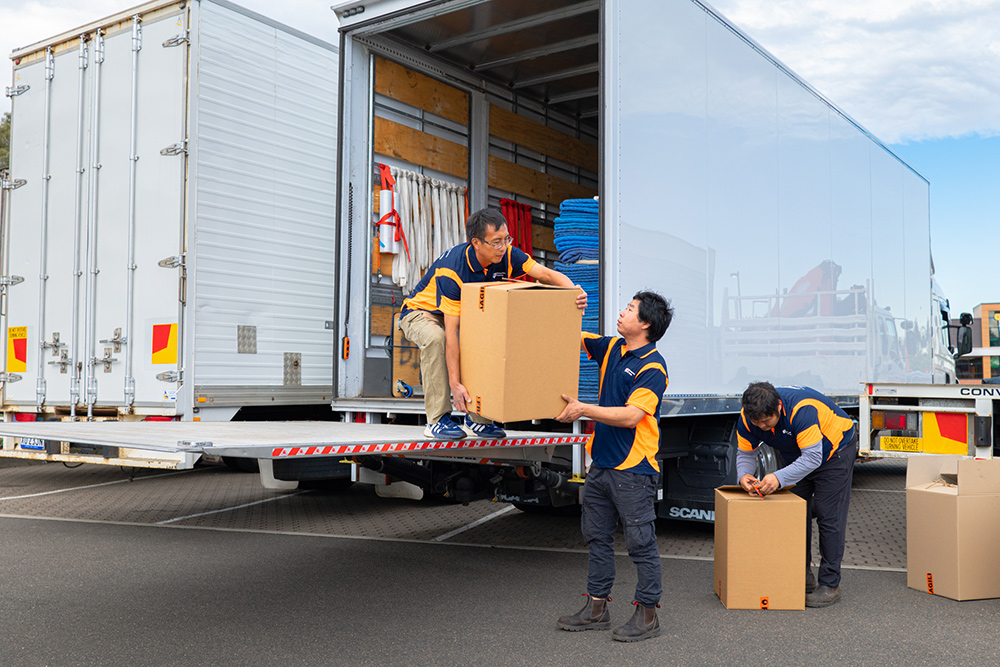
Unloading and placement is also a vital part of moving a shipping container.
Step 5: Unloading and Placement
Upon reaching the destination:
- Site Preparation: Ensure the unloading area is level and free from obstructions.
- Unloading the Container: Use appropriate equipment to unload the container safely.
- Final Placement: Position the container as required, ensuring stability and accessibility.
Proper unloading and placement are essential to maintain the container’s condition and facilitate its intended use.
Need Help Moving a Shipping Container?
If you’re wondering how to move a shipping container safely and efficiently, Bill Removalists Sydney is here to assist. Whether you’re relocating containers within Sydney, Newcastle, Brisbane, or across Australia, our professional team ensures a seamless process from start to finish.
With years of experience, specialised transport solutions, and a commitment to safety, Bill Removalists Sydney guarantees a stress-free relocation for your shipping container needs.
Get a Competitive & Affordable Online Quote
When it comes to moving shipping containers, Bill Removalists Sydney offers everything you need for a stress-free and affordable moving. Get a competitive online quote now or speak to one of our friendly representatives at 0425 351 578.
Where To Find Us?
You can find our offices here: 45 Platform Street, Lidcombe, NSW 2141
Contact Us
Email Address: info@billremovalistssydney.com.au
Call Us: 0425 351 578
We are open Monday – Sunday: 7:30am – 7:30pm
FAQs
How do you move a shipping container from ground to trailer?
To move a shipping container from the ground to a trailer, you’ll need specialised equipment like cranes, tilt tray trucks, or side loaders. These tools lift the container safely onto the trailer, ensuring stability and compliance with safety standards.
Can you put a shipping container on a trailer by yourself?
While it’s technically possible, it’s not recommended to load a shipping container onto a trailer without professional assistance. The process requires precise handling and equipment to ensure safety and prevent damage.
What is the best method for transporting a shipping container?
The optimal method depends on factors like distance, container size, and site accessibility. Tilt tray trucks are suitable for short distances, while flatbed trailers are ideal for long hauls. Engaging professionals ensures the best approach for your specific needs.
Do I need a permit to transport a shipping container?
Permit requirements vary based on location and container size. Oversized or heavy loads typically require permits. It’s essential to check local regulations or consult with professionals to ensure compliance.
Can I move a cargo container across states?
Yes, moving a cargo container across states is possible, but it involves adhering to various regulations and obtaining necessary permits. Professional movers like Bill Removalists Sydney handle these logistics, ensuring a smooth interstate move.

About The Author
Bill Chen
Before 2008, Bill was working with a local removalist company in Sydney and was witness for a number of deformities and wrongs in the working of the company. Observing the atmosphere, a thought came to Bill’s mind that he could do much better if he were the owner of the company, by offering a fully transparent service to the clients with a friendly and trustworthy staff and no hidden fee structure; and thus, in 2008, AAA Bill Removalists Sydney was formed with just one truck and only Bill as staff. Even if Bill Chen began the company as just one man, the company grew fast. The operation expanded beyond the Sydney suburbs and to the surrounding cities: Wollongong, Wagga Wagga, Albury, Sunshine Coast, Gold Coast, Coffs Harbour, Canberra, Newcastle, Melbourne, Brisbane, and other.
Most Popular Posts

May 31, 2022

August 9, 2022

March 15, 2023

November 4, 2021
Complete Checklist of Addresses to Change When Moving in Australia


